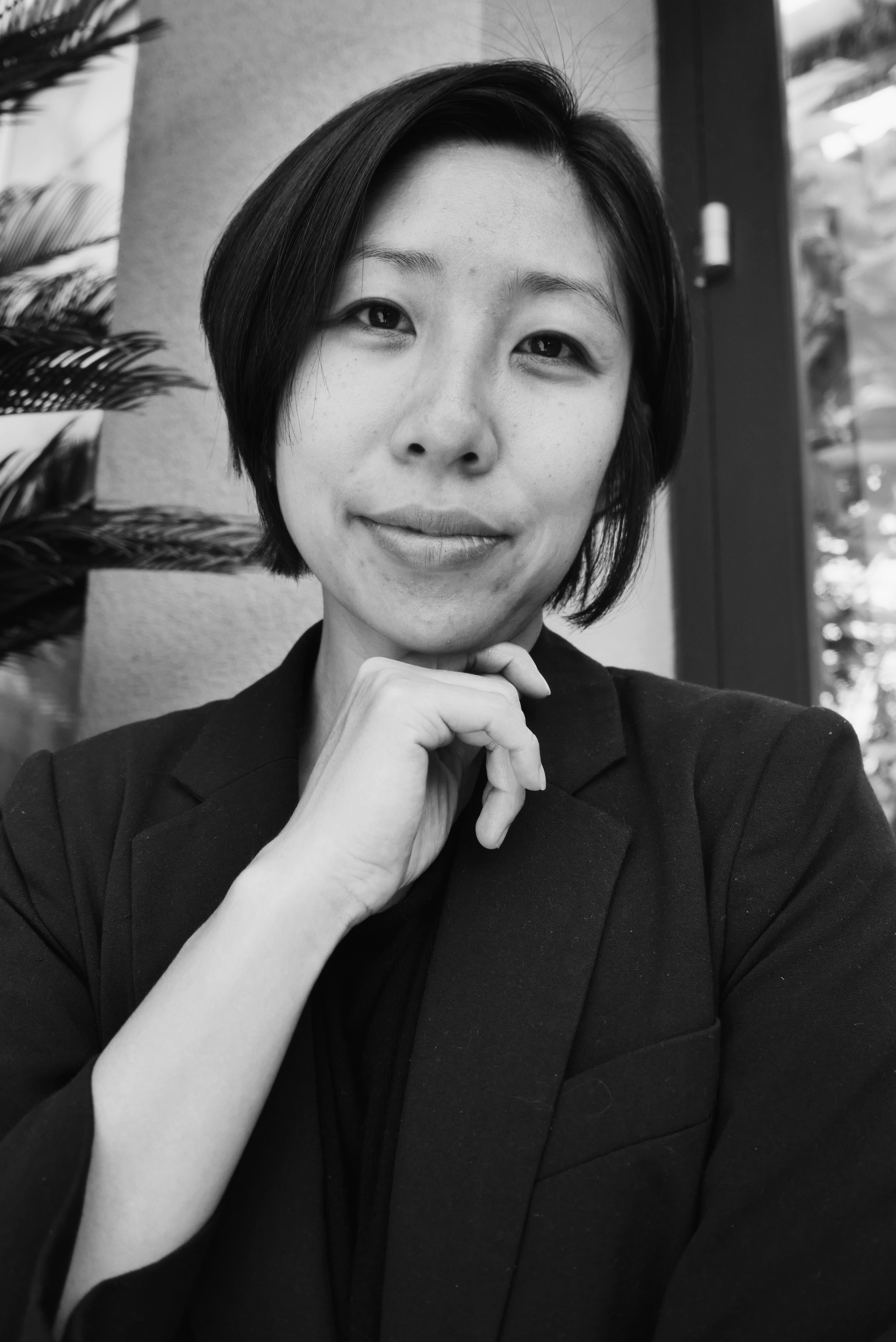
Cindy Anh Nguyen is an artist-historian among other hyphenations, working between fields of global Southeast Asian history, digital public history, library and information studies. She is currently an assistant professor in the Information Studies department and Digital Humanities Program at University of California, Los Angeles and specializes in Southeast Asian print culture and history of knowledge and information. Her book manuscript, “Bibliotactics: Libraries and the Colonial Public in Vietnam, 1917–1958” uncovers the how libraries functioned as both instruments of colonial dominance and an experimental space of public critique. She earned her Ph.D. in Southeast Asian History at the University of California, Berkeley, and was previously an International Humanities Postdoctoral Fellow at Brown University and University of California Chancellor’s Postdoctoral Fellow at University of California, San Diego.
Nguyen bridges academia and the public through her multimedia arts practice, multilingual poetry, and community platforms. Her body of work include the experimental film “The Undeniable Force of Khó Khăn” (screened at Viet Film Festival, Harvard, Yale University, semi-finalist for Flickers International Film Festival), mixed-media publications in Wasafiri, Ajar Press, Diacritics, and exhibitions such as “Textures of Remembrance: Vietnamese Artists and Writers Reflect on the Vietnamese Diaspora” curated by the Oakland Asian Cultural Center and Diasporic Vietnamese Artists Network. She is the cofounder of Feminist Trouble, a global digital public research collective committed to work through the methods and ethics of Southeast Asian studies through feminist and decolonial practices. Her arts and scholarship interweave the personal and political, moving between languages of expression (Vietnamese and English) and across disciplinary borders to meditate upon themes of knowledge formation, refugee memory, and translation. She is committed to building inclusive spaces for intergenerational communication and experimental co-creation, dreaming up ways to empower through language, self-expression, and community health.

Book Manuscript
Bibliotactics: Libraries and the Colonial Public in Vietnam, 1917-1958

This book uncovers the emergence of a colonial public sphere within the library in Vietnam. The colonial public sphere comprised a diverse group of builders and users of the library– French and Vietnamese government bureaucrats, library personnel, journalists, and everyday library readers–committed to defining the political role and everyday meaning of the public library. Focused primarily on the state Central Library in Hanoi and Cochinchina Library in Saigon from 1917 to 1958, I show how libraries functioned as both instruments of colonial dominance and an experimental space of public critique. Libraries reinforced colonial power as infrastructures of symbolic modernity and a colonial information order—the physical buildings of libraries embodied castles of Western knowledge methodically organized by French concepts of library and information science. The library symbolized Enlightenment intellectual emancipation from ignorance, yet its collections of a Western canon and exclusionary policies of access and public behavior reinforced a French civilizing mission and colonial rule over an indigenous population. With an increase of urban populations in Saigon and Hanoi and an expansion of the colonial education system in the late colonial period, the libraries became vibrant public spaces and reading centers for the growing population of Vietnamese urbanites. As Vietnamese readers joined the existing population of colonial administrators and French expatriates library users, the library became the preeminent institutional space for debating questions of the ‘public.’ What types of public behaviors were permissible and who from colonial society were included in the public such as French and Vietnamese, male and female, only colonial administrators or the wider public of Vietnamese students, professionals, and intellectuals? From the 1920s to 1940s, the library was an important political battleground for Vietnamese journalists and French colonial reformists to debate limitations in French colonial associationist policies of developing educational institutions such as schools and libraries for the indigenous Vietnamese masses.
In addition to public debate, the library infrastructure was a nexus for experimentation in public social practices, urban life, and self-directed erudition for a colonial public of emerging elites. Library users cultivated a distinctive public reading culture in the library space, shaping the everyday mission and social function of the library beyond the hegemonic aspirations of the state. The well-lit, open, and centrally located reading rooms of the Hanoi and Saigon libraries offered opportunities for urban readers to engage in the practices of leisure reading and public social exchange. The library reading room and lending section provided an incomparable resource for broad self-directed learning and free access to global literature, reference works, and news periodicals in Vietnamese vernacular script quốc ngữ and French. I challenge the assumption of the library as a neutral space, a storehouse of accumulated knowledge scientifically assembled by anonymous librarians and quietly perused by modern readers. Instead the library was a debated institution informed by contradictory politics of intellectual liberation and colonial dominance, and reimagined through social practice and public critique.
Ongoing Digital Humanities Research
-
Vietnamese Visual Texts: Critical Analysis of Collaborative Colonial Texts
[Critical Digital Humanities, Computer Vision, Content Analysis, Virtual Reality, Pedagogy, Digital Reading]

I am the principal investigator on “Vietnamese Visual Texts” which critically examines indigenous knowledge production within colonial visual texts. In the first phase of the project (2019-2020, Brown University), I led a team of undergraduate researchers to content code a rare visual encyclopedia of Vietnamese crafts, cultural practices, and technologies commissioned in 1909 by a French colonial administrator and produced by a team of unnamed Vietnamese contributors (draftsmen, researchers, annotators, translators, and woodblock printers). The encyclopedia includes visual sketches of Vietnamese crafts and social practices as well as annotations in both French and Vietnamese (in Chữ Nôm, an endangered logographic Chinese writing system of Vietnamese language). I apply content analysis, visual and textual analysis to investigate the invisible authors and representation of race, gender, and labor. In the current stage of research, I collaborate with computer science professor Dr. David Laidlaw (Brown University) to data model descriptive patterns according to languages (Vietnamese Nôm script, French), visual depiction, and aesthetic style (visual archetypes, emotion, modularity). I use these patterns to uncover a plurality of authorship and the production of racialized and gendered hierarchies of knowledge. Our team is also developing a virtual reality tool for visualizing multilingual visual texts and historic data in spatial non-linear formats. As a close cultural analysis and computational investigation, this study offers novel contributions to the fields of science and technology studies, history of the book, Vietnamese history, labor history, and colonial studies. Furthermore, the virtual reality tool seeks to offer a virtual environment for research and teaching through virtual immersion and spatial organization of historic data.

-
Social Library
[Database, Visualization, Prosopography, History of the Book, Publishing and Library Data]
I am the principal investigator of the Social Library, an open database on twentieth century Vietnamese intellectuals and their publications and a digital companion website to the book project “Bibliotactics.” As the first large scale intellectual and literary study of Southeast Asia, this is an ambitious project to visualize the social and cosmopolitan world of Vietnamese writing, reading, and thinking. This focus on Vietnamese writers and readers decolonizes literary scholarship from the West, by showcasing the dynamic ‘Republic of Letters’ literary exchange in Southeast Asia during the colonial and postcolonial period. Social Library will compile data on Vietnamese intellectuals (prosopography) in conversation with Vietnamese publishing and library data (history of the book). This digital research tool will yield large scale analysis of authors, publishing houses, titles, and readers, thus offering insight on temporal and spatial patterns of literature and audiences. This will be an invaluable research tool for my historical scholarship on Southeast Asia and will be an important intervention in digital, literary, and bibliographic scholarship. The database will be open to contributions from other researchers and users can create visualizations from the shared data. The database and visualizations will function as an interactive digital public history platform where researchers, educators, and students can co-create the database and garner new interpretations through visualizations. Initial development of this project was funded by the Social Science Research Council IDRF and Institute for East Asian Studies at UC Berkeley.
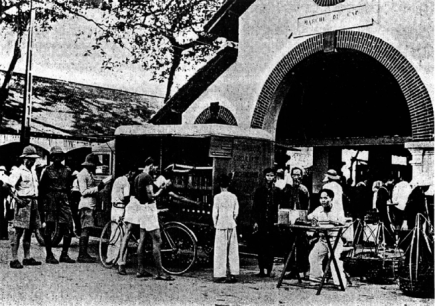
A 1936 ‘Bibliobus’ mobile library serving Southern Vietnam. Paul Boudet, Gouvernement général de l’Indochine. Rapport sur la direction des archives et des bibliothèques: 1937-1938. (Hanoi: Imprimerie Le Van Tan, 1938)
3.Virtual Angkor
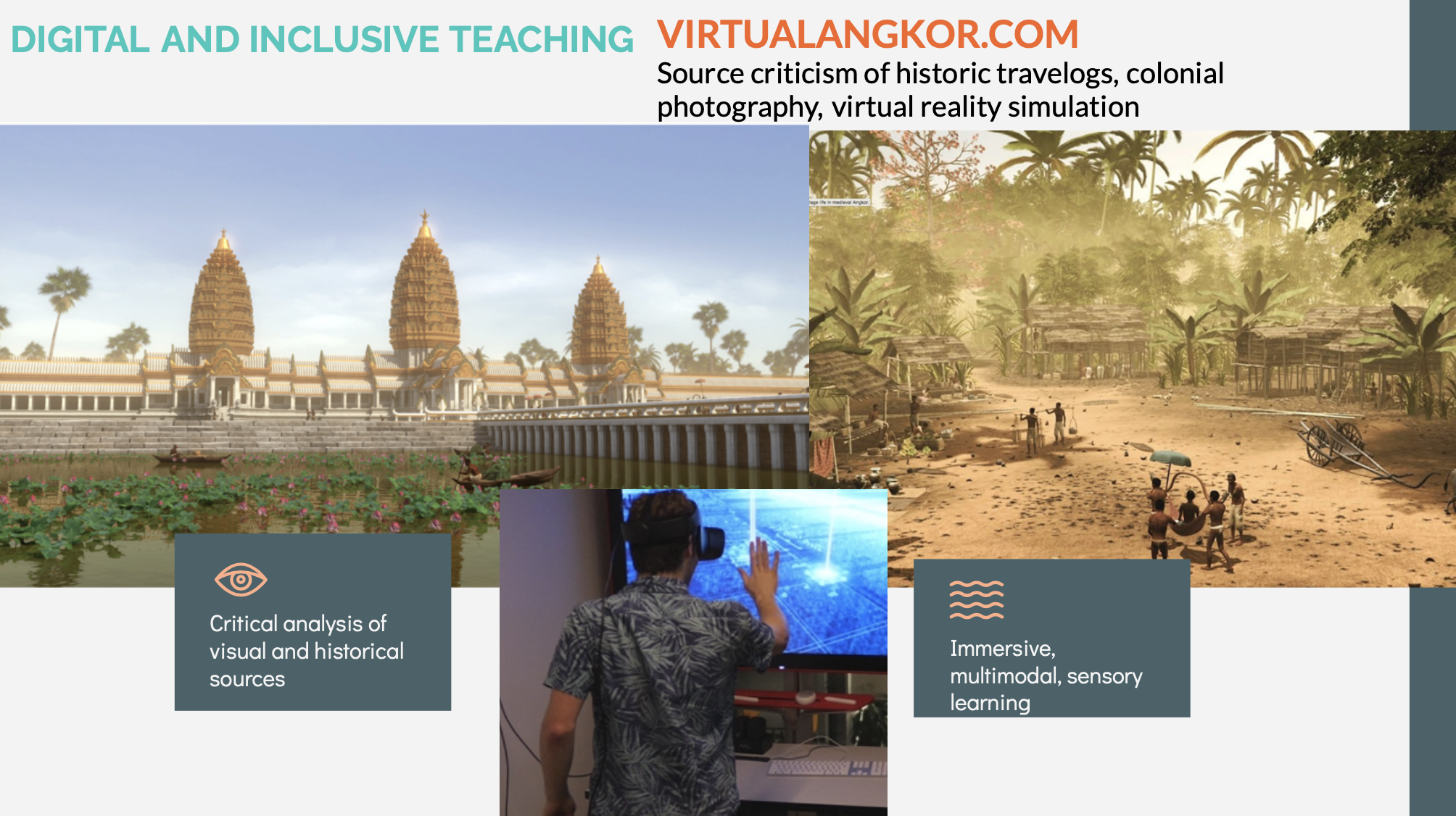
Virtual Angkor project (SensiLab, University of Texas, Monash University, Flinders University, Brown University) is an immersive virtual reality and 3D simulation of 13th century Angkor metropolis for teaching history, archaeology, and visual art. The project won the 2018 Rosenzweig Prize for Innovation in Digital History by the American Historical Association. Since Fall 2019, I have been an affiliated faculty on the project and worked with the Virtual Angkor team to bring the VR scenes into a teaching module on visual representation in my courses at Brown as well as workshops on Virtual World Building at UCSD.
Archive of Past Digital Work
Deconstructing Libraries: Predicting Titles, Topics, and Publication City
[Computational Text Analysis, Library, NLP, Semantic Models, Experimental Design]
This project analyzed a complex non-English language historical data source—bibliographies of the United States Library of Congress collections of Vietnamese language materials retrospectively collected up to 1979 and 1979-1985. We employed a dual approach of 1) contextualized historical reading and 2) machine learning methods (frequency counts, topic models, Naive Bayes, permutation tests) to understand library collecting patterns, the relationship between topics and publication location, and change over time. This originated as the final project for ”Deconstructing Data Science” course taught by Professor David Bamman (School of Information, UC Berkeley 2016), where I collaborated with co-principal investigator Jordan Shedlock to examine the relationship between book titles and publication city.
Since 2014, I have been co-principal investigator on the DH at Berkeley Mellon funded project Vietnamese Intellectual Networks Database (VIND) along with collaborator Matthew Berry. VIND provides detailed historical data regarding key Vietnamese intellectuals, their geographic movement, and their intellectual networks. In the future, VIND will function as a collaborative resource for researchers, educators, and those interested in Vietnamese history.
In 2014-2015 I was the Digital Humanities Assistant and co-convener of the Digital Humanities Working Group. I contributed to the development of the DH at Berkeley program, working group events in the Berkeley community, and was the coordinator of Berkeley DH Faire (April 7-8, 2015).
In 2012-2013 I was involved in digital humanities projects such as the creation of the MSU Vietnam Group Archive led by the digital humanities center MATRIX and University Archives at my Master’s degree institution Michigan State University. While at MSU, I participated the CHI fieldschool on data visualization and digital humanities and helped to build Detroit Digital.
Mission: Education, Open Source, and Sharing
Often the ivory tower of academia is portrayed as self-serving and removed from the larger community. Pushing against the image of the isolated ivory tower of intellectualism, I aspire to make the research, reading, and writing process more transparent through my own work. My mission for my website consists of two parts:
- Contribute to diversify the body of online knowledge about Vietnam.
- Share my experience as a graduate student and researcher as a process of exploration, experimentation, and communication.
I want to contribute to a culture of sharing things in progress. Working papers, thoughts, typos, unpolished ideas. Join me on this online community of open knowledge, discussion, and sharing.
All of my project files are available on GitHub–access, share, and contribute to improving my projects and datasets.

Second Project
Distributing Revolution: Propaganda, Statistics, and Information in the Democratic Republic of Vietnam (1955-1975)
Distributing Revolution is an information history of propaganda production, distribution, and reception. My project argues that the DRV state created an ‘information order’—an elaborate infrastructure to distribute propaganda, collect statistics, and monitor its citizens. Furthermore, I will demonstrate how the institutions and technologies of measurement such as the Central Distributor [sở phát hành sách trung ương] operated to increase governmental legitimacy and to quantify social, cultural, and economic transformation under socialism.
Archive of Previous Research
“Where People & Places Meet: Travel and the Spatial Identities of Indochina, France, and Hue in 1920s-1940s Vietnamese Print”
By Cindy A. Nguyen
A Thesis Submitted to Michigan State University for the degree of Master of Arts in History, 2013

 Cindy A. Nguyen