Critique – Creation as Method
- Critique: Invisible labor, agency, marginalized voices
Critique is fundamental to the humanistic project of contextual understanding of knowledge production–from the authors, audiences, and media forms, to the structural and intentional absences in the cultural record as a product of racism, capitalism, sexism, and other hegemonic power structures designed to self-perpetuate universal knowledge projects.
- Creation: reimagining/narrativizing/speculation
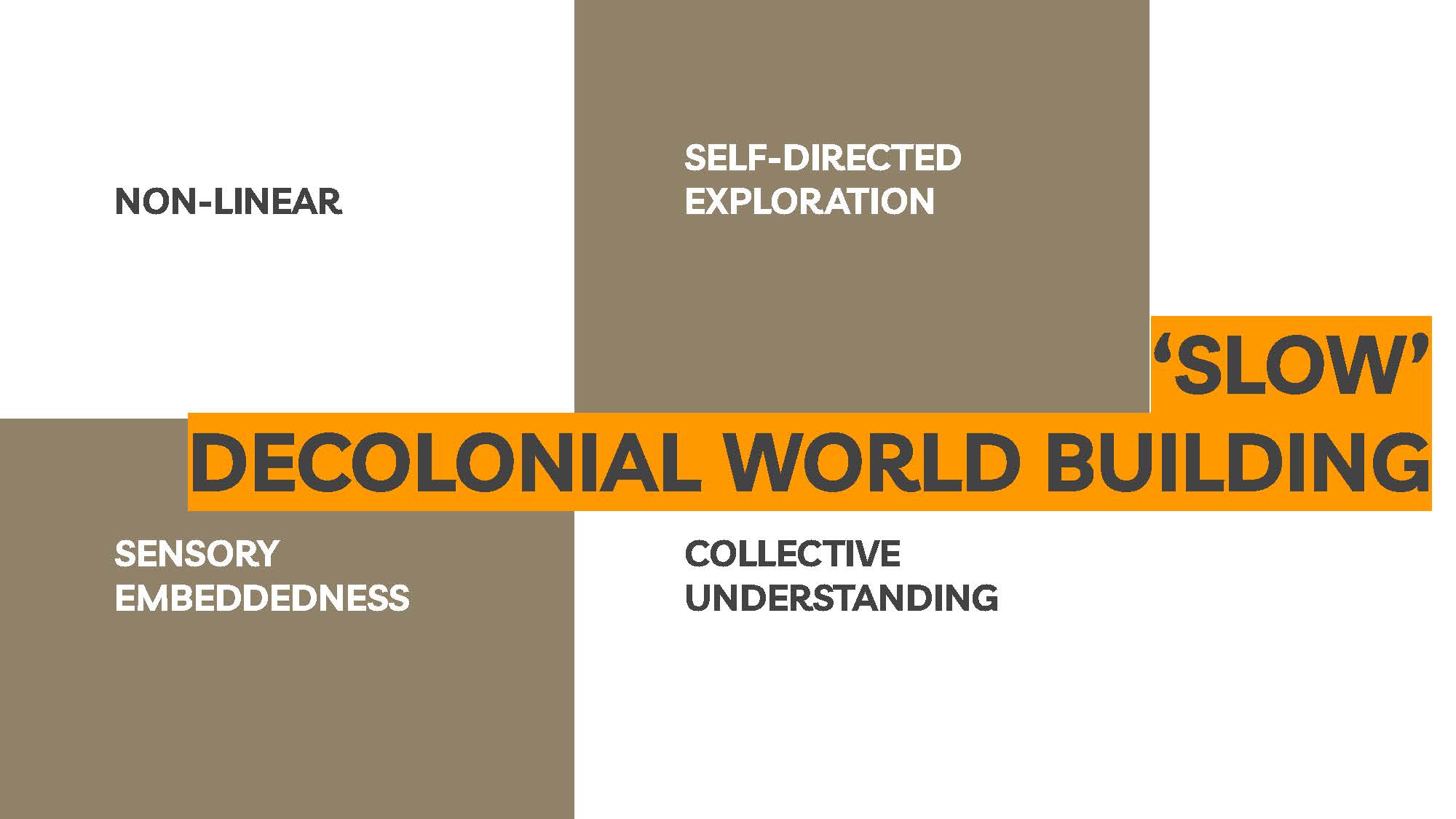
The second key part of my decolonial framework is to move towards ‘creation’ as a careful act of reparative justice against silences and epistemic inequity. Creation centers critical fabulation, imagination, and worldbuilding towards a pluriverse of humanistic understanding centering and caring for silenced actors from colonial documentation regimes. This interwoven framework builds off of the fundamental work in black feminist studies (Saidiya Hartman, bell hooks), decoloniality and decolonization (Roopika Risam, Alex Gil, Walter Mignolo, Ma Vang), to move towards a pluriverse of understanding through experimental digital analysis and narrative.
By using a decolonial critique-creation framework, we seek to move away from binaries of colonialism v. anti-colonialism, West v. East, exogenous v. indigenous, towards understanding relationships, complexity, and context.
VIETNAMESE SOCIAL WORLDS


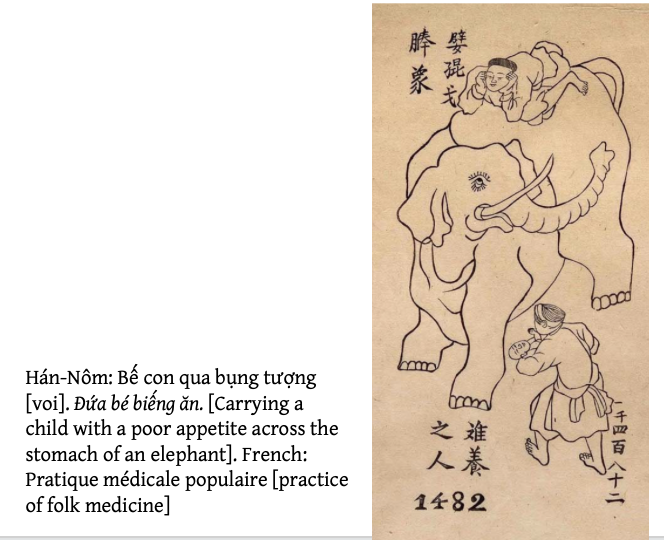
Publication on Research Project: Nguyen, Cindy Anh. “Critical Readings of a French Colonial Vietnamese Text: Reimagining Social Worlds through Visual-Textual Representations of Female Labor.” In DH+BH: An Interdisciplinary Collection on Digital Humanities and Book History, edited by Spencer Keralis and Cait Coker. Illinois Open Publishing Network, 2025 Link here
Teaching 19th-20th century Vietnamese History and French Colonialism
Decolonial Data Course: Vietnamese Historical Narratives (Spring 2024 UCLA Digital Humanities)
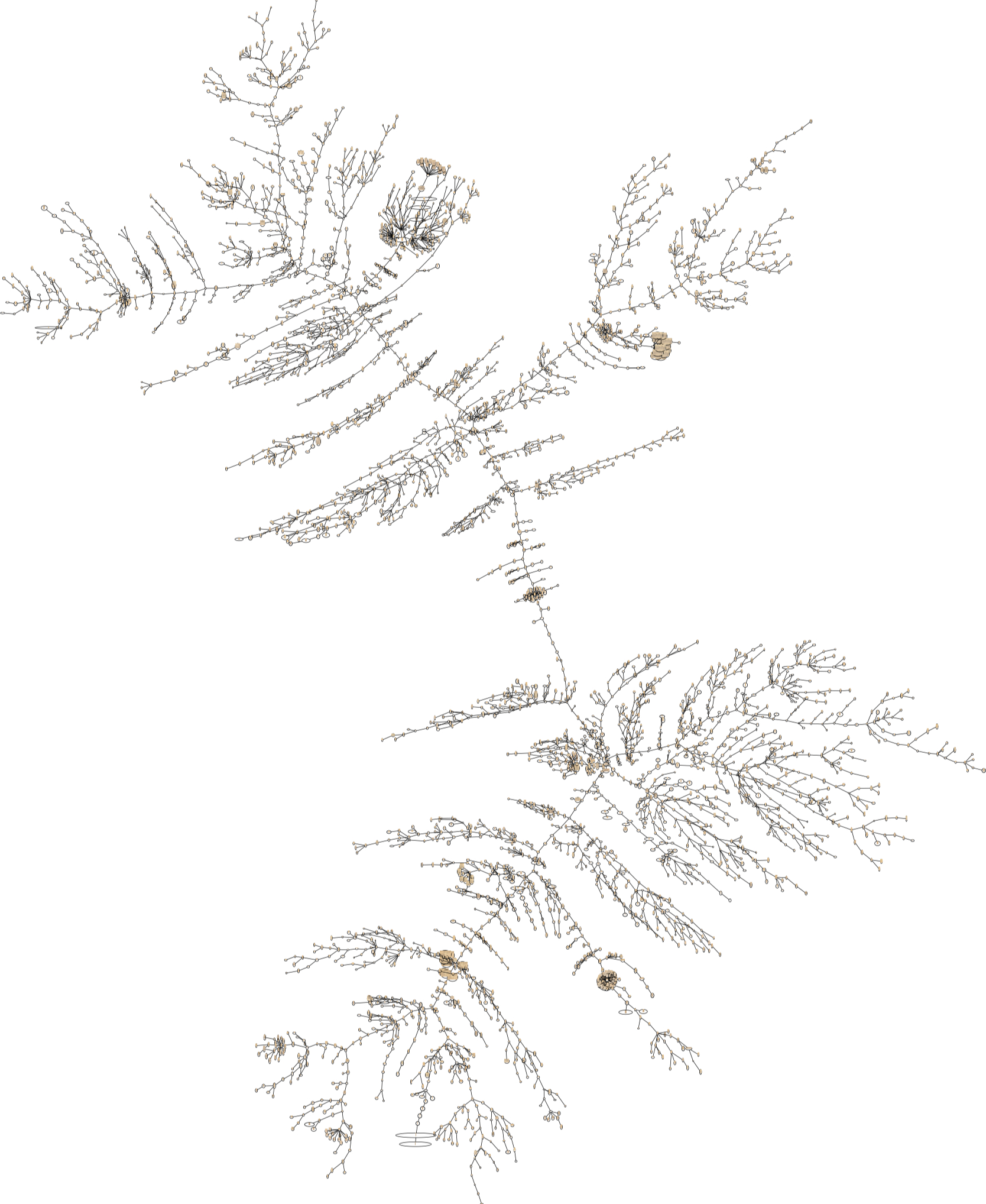
This advanced undergraduate course focuses on critical design approaches to colonial data and will culminate in collaborative, playful digital storytelling experiments to platform alternative *decolonial narratives (we critique and reflect on the specificity of decolonial work in this class). We will focus on critical data studies, research design and experimentation, and multilingual and multimodal digital humanities analysis using a sandbox of French colonial era Vietnamese data.
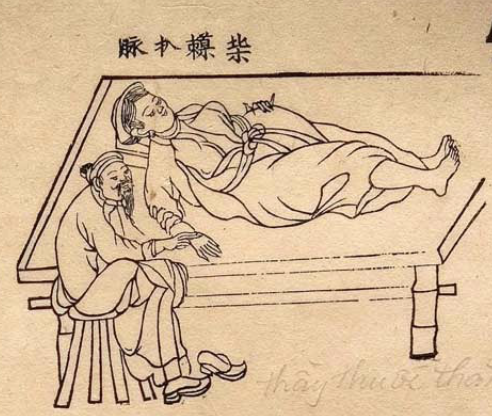
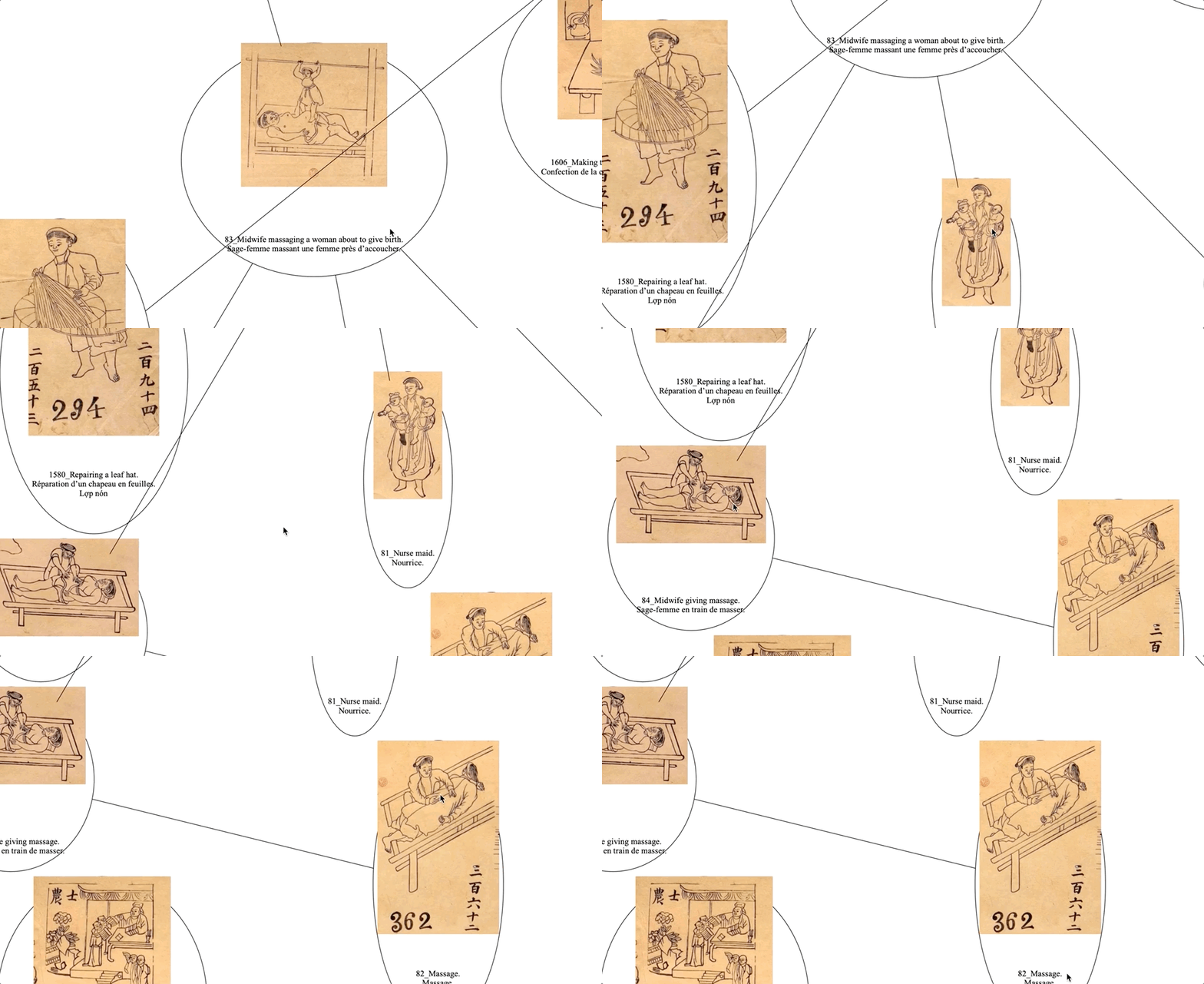
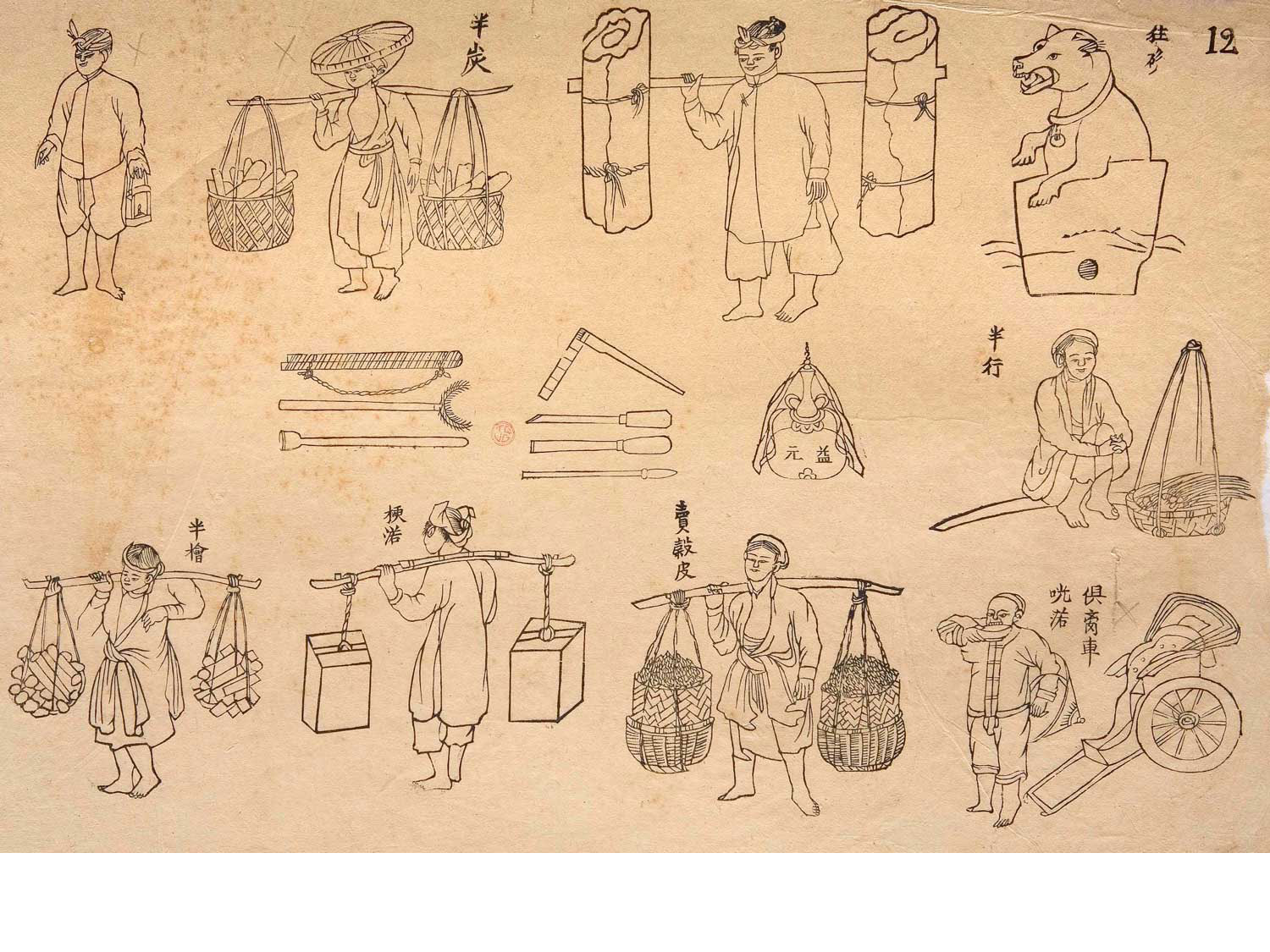
Decolonial Data Pedagogy Lecture
Slides for talk with Fulbright-Hays (Middlesex Community College and Lowell Public Schools) Group 2023:
Decolonial and Critical Visualization Practice in the Classroom
This 60-90 minute collage activity introduced collage as a visualization practice to reimagine life and visual representation of colonial Vietnam. This can be embedded in a historical course on Southeast Asia, colonialism/postcolonialism/decolonial critique, or an information visualization course to take students through visualization as a process of text to data to visualization and world building.
Lecture & Teaching Resources on Vietnamese Culture & Society during French Colonial Period
Explore the 700 Pages of Vietnamese Life
Currently MST English in PDF in Open Science Framework (2023). Forthcoming exploration of MST, videos, embedded PDFs

CAMBODIAN SOCIAL WORLDS
Teaching 13th century Cambodian History, Legacies of French Colonial Representation, and Virtual Reconstructions
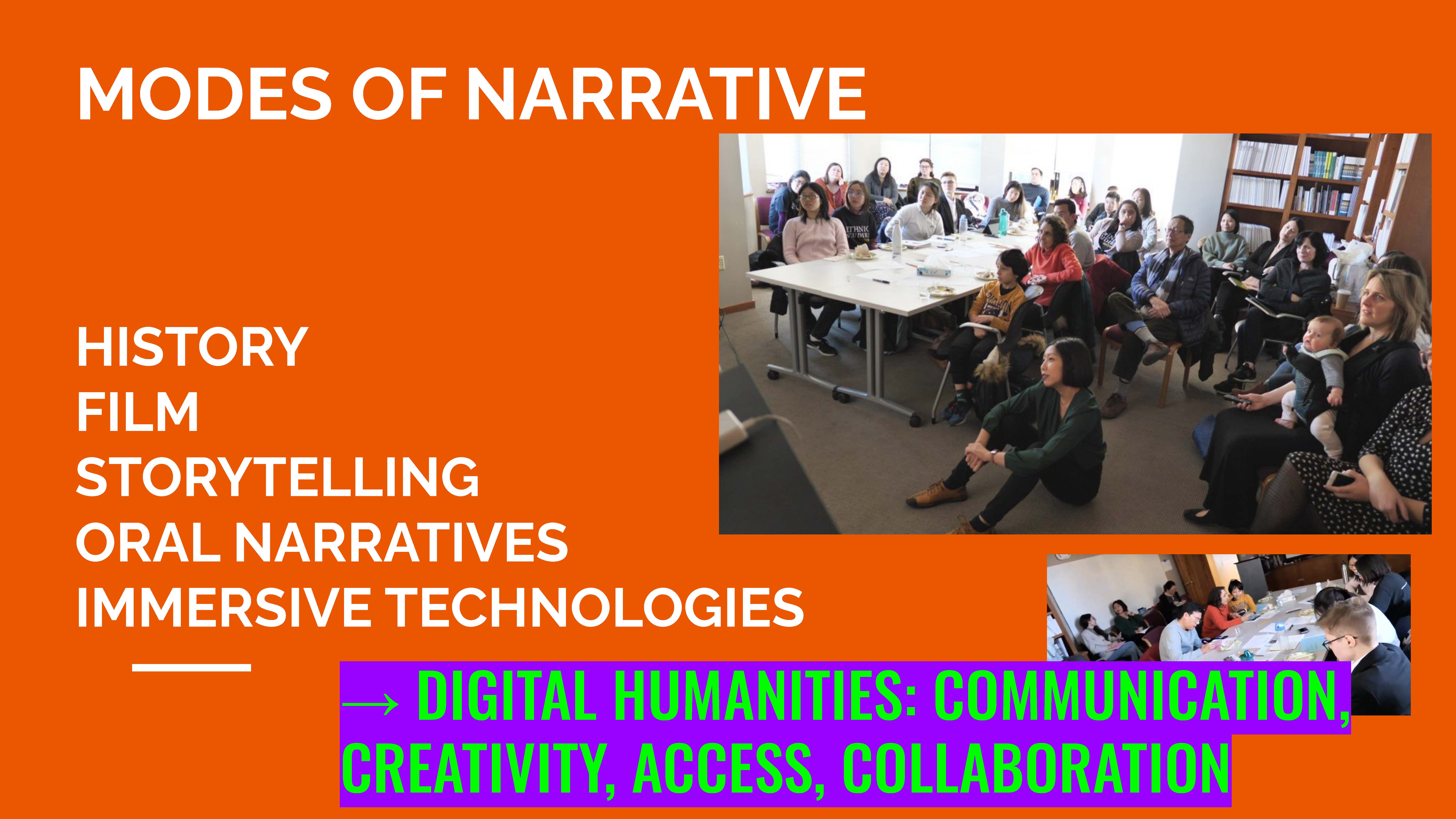
Virtual Angkor Teaching Module
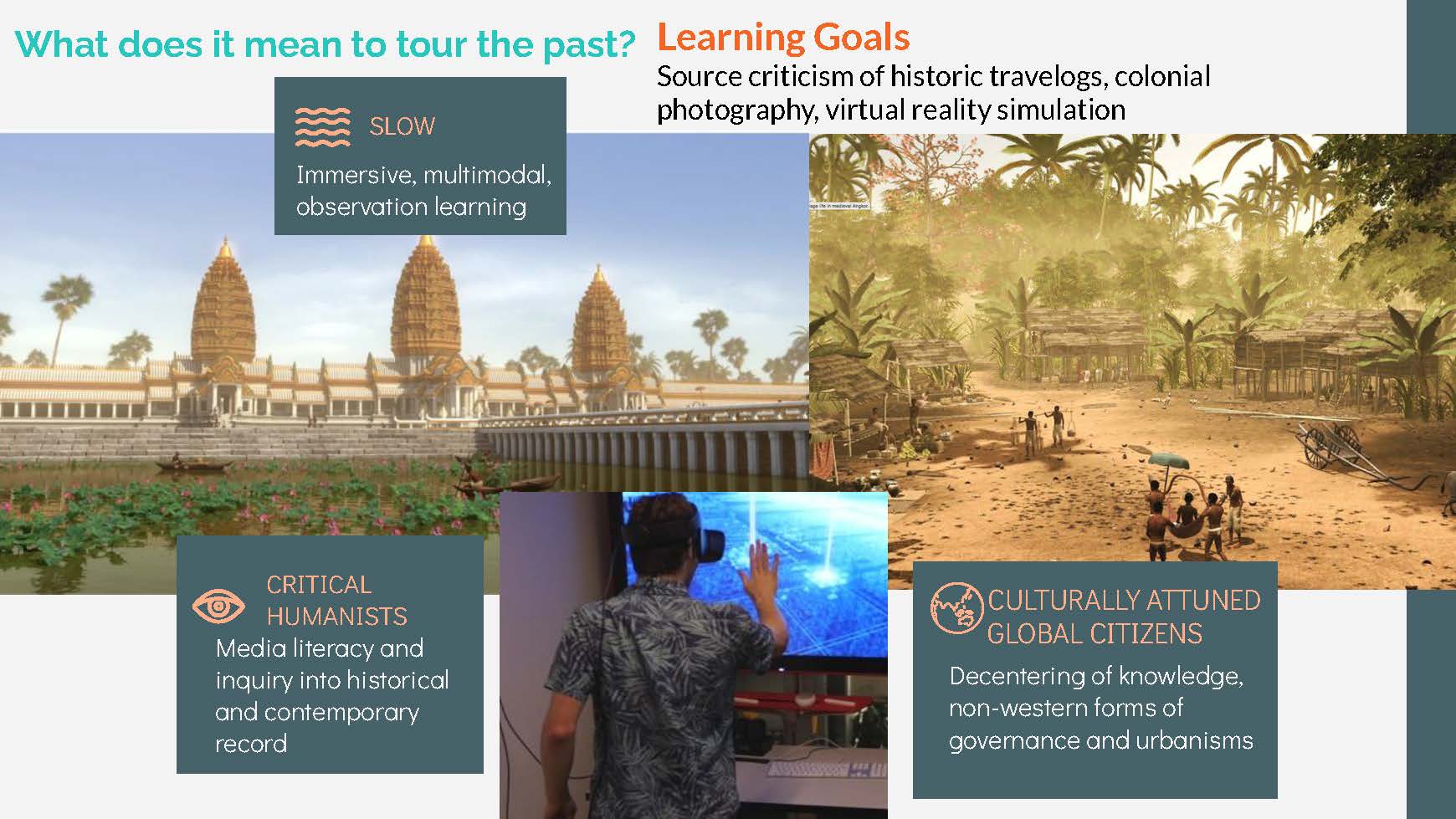
I designed the following teaching module guided by the question “What does it mean to tour the past?” We carry this out firstly through a slow observation based learning (where often in university environments it’s all about fast, skimming, speed reading, losing the experiential wonderment of it all.) I organized this teaching module be a collective meditation on meaning making, guiding questions, vocalizing understanding, figuring out collectively an unfamiliar historic moment and social world of thirteenth century Angkor.
Complete Virtual Angkor teaching module here: https://cindyanguyen.com/2019/11/25/teaching-virtual-reality-module-analyzing-representations-of-angkor/
Slow Viewing with Virtual Angkor Slides:
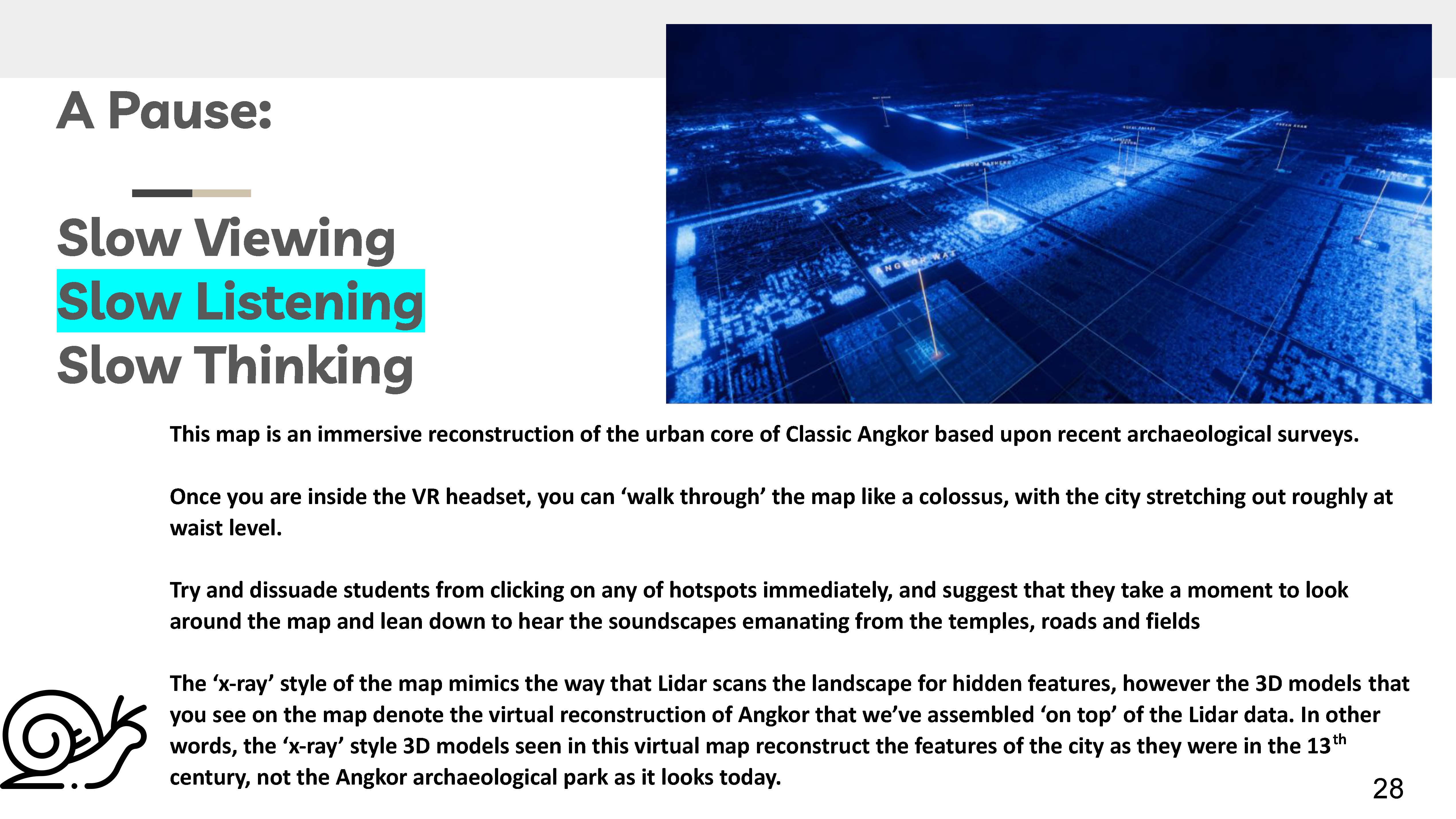
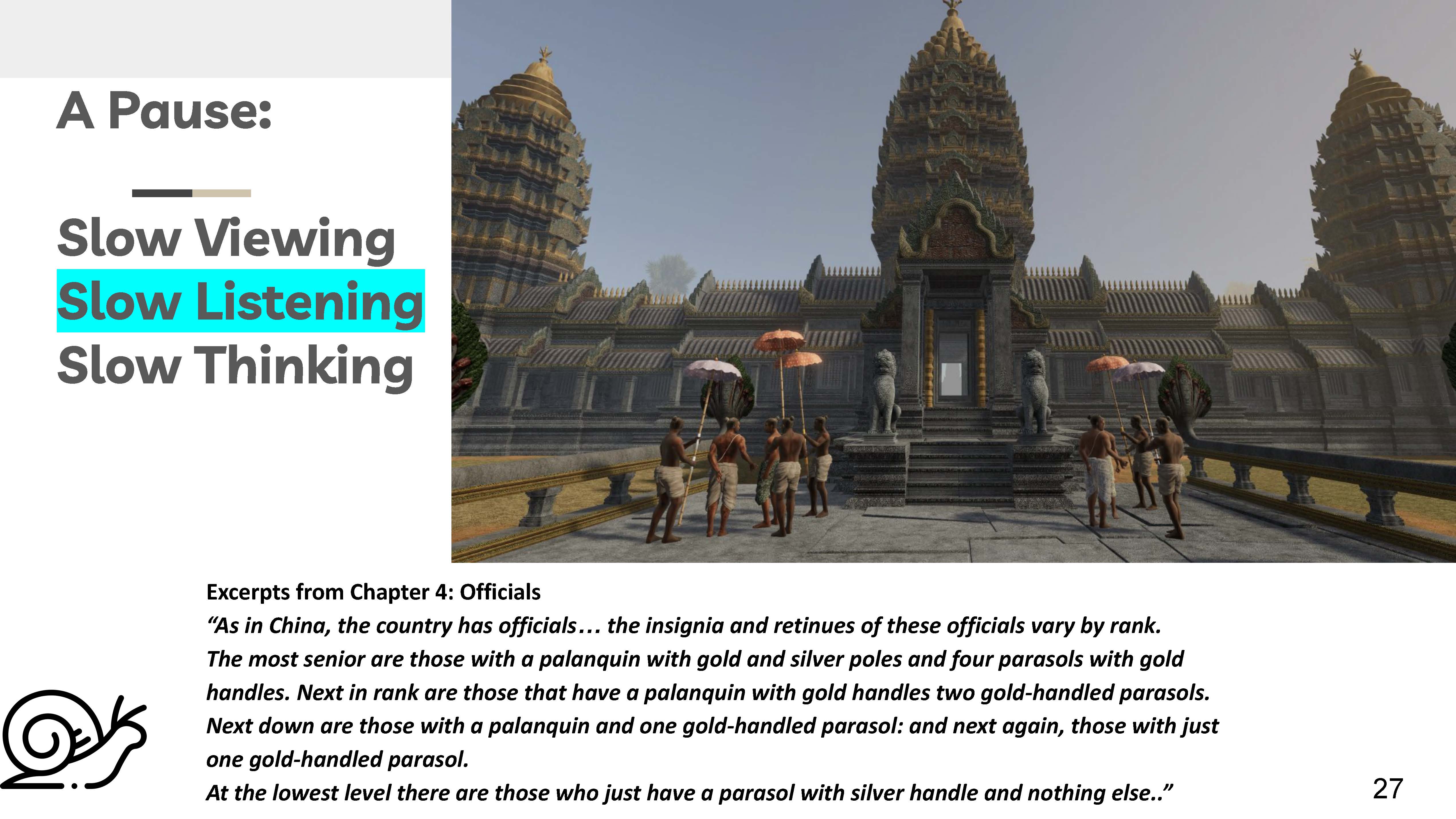
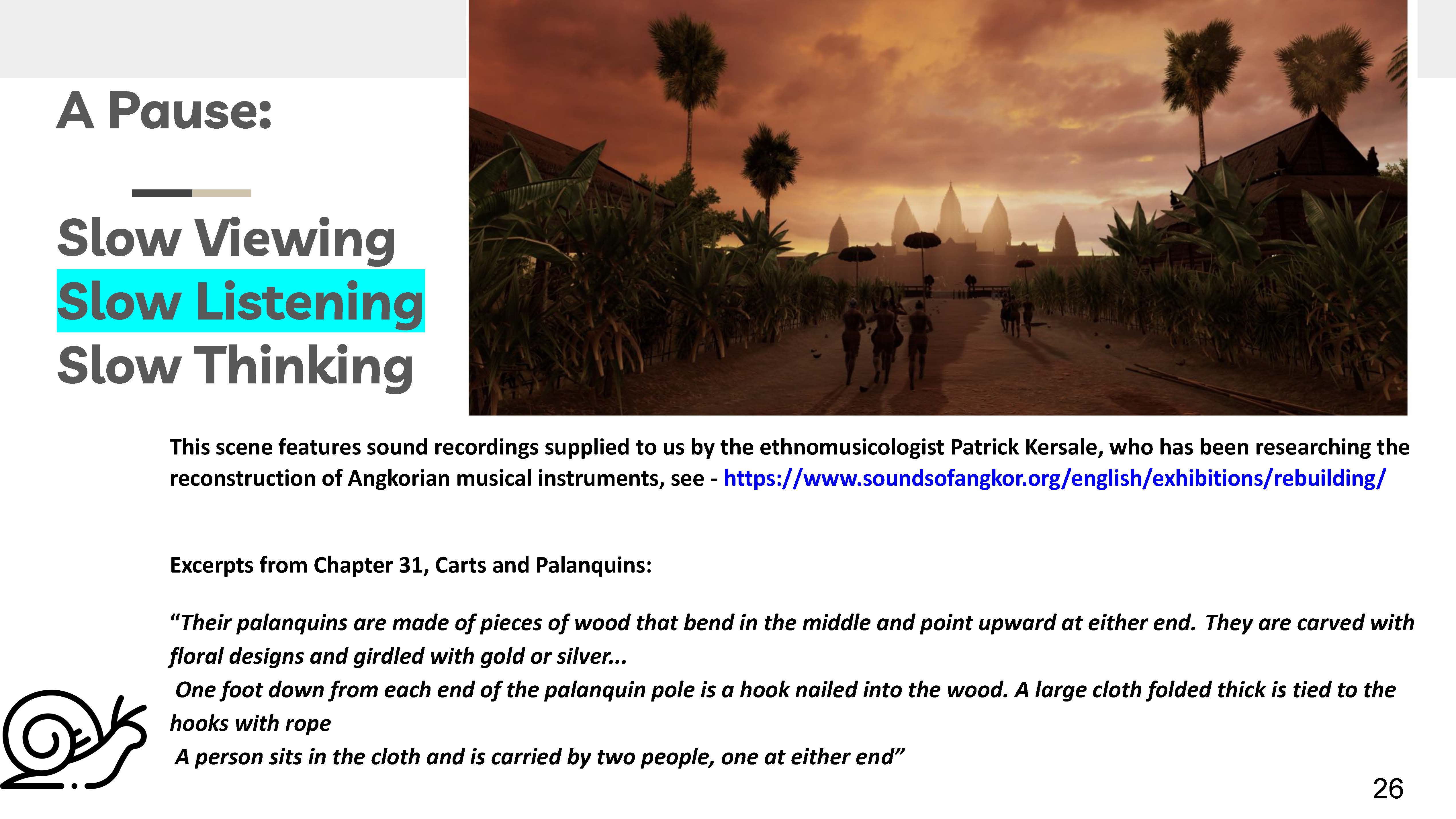
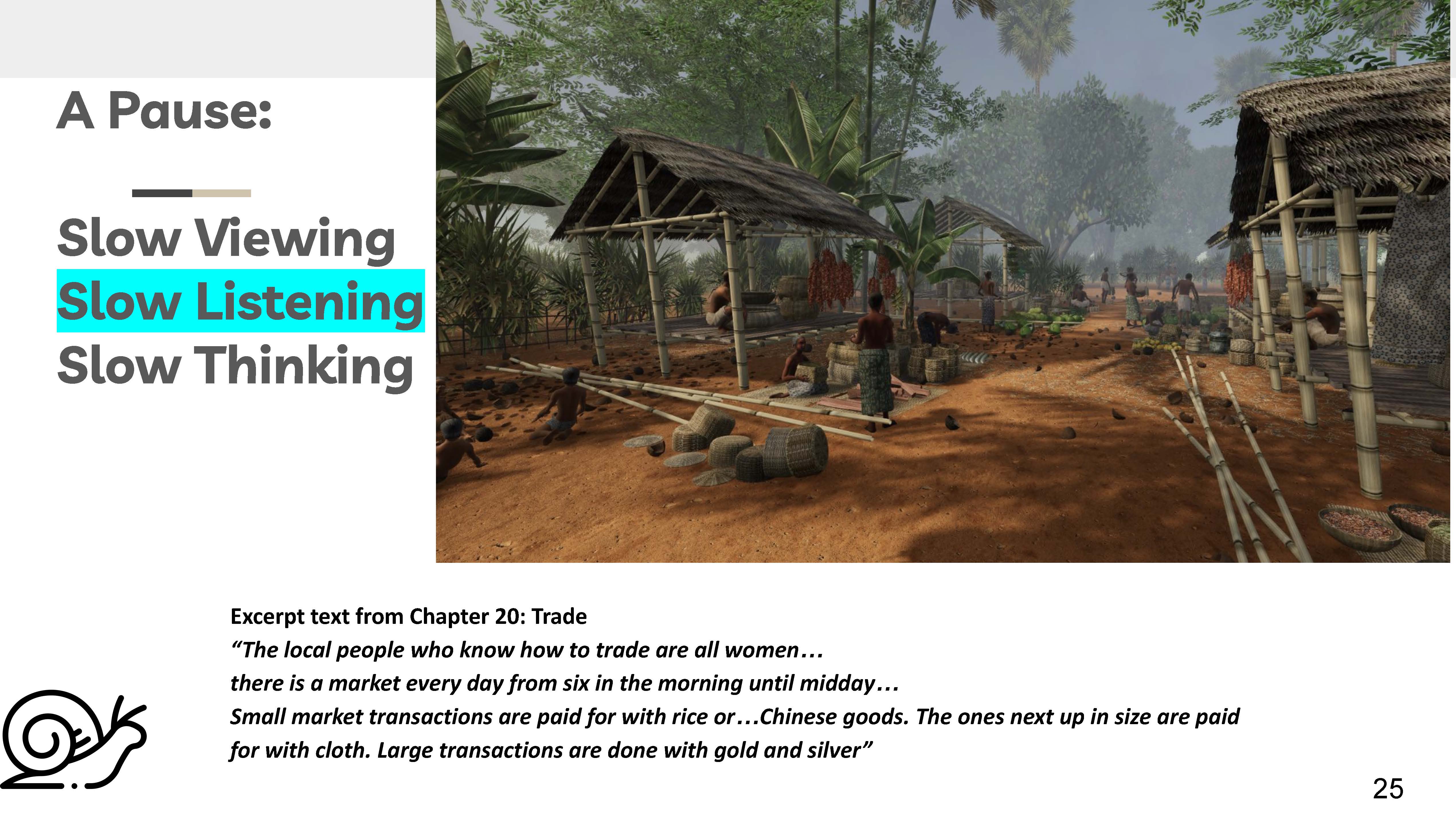
Slow Viewing Workshop
In this workshop, Dr. Nguyen invites participants to practice a ‘slow viewing, slow listening, slow thinking,’ process of meaning making in virtual reality that can be taught in classrooms focused on world history, global Asias, and digital media and design. Dr. Nguyen leads an exploration of Virtual Angkor, a virtual reconstruction of the medieval Cambodian capital of Angkor that seeks to explore the diversity and complexity of Southeast Asia in digital heritage studies. Virtual Angkor reappraises the neglected region of Southeast Asia as a dynamic and important center for understanding global processes of premodern urbanisms, climate change, and ‘non-western’ forms of governance and power. This workshop invites participants to enter a VR space to listen, examine, and question. The experience aims to facilitate a ‘critical making’ understanding of the past which undermines the romanticized representations of the exoticized orient or the ruins of Angkor that permeate both the French colonial record and the contemporary tourism industry complex of Cambodia.
 Cindy A. Nguyen