BOOK REVIEW: Curating Recent Memory in Cambodia

th

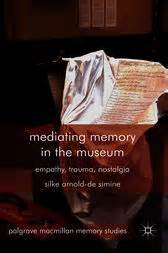
Arnold-de Simine, Silke. Mediating Memory in the Museum: Trauma, Empathy, Nostalgia. Palgrave Macmillan Memory Studies. Houndmills, Basingstoke, Hampshire ; New York, NY: Palgrave Macmillan, 2013.

Ledgerwood, Judy. “The Cambodian Tuoul Sleng Museum of Genocidal Crimes: National Narrative.” Museum Anthropology 21, no. 1 (1997).

Ly, Boreth. “Of Performance and the Persistent Temporality of Trauma: Memory, Art, and Visions.” Positions: East Asia Cultures Critique 16, no. 1 (2008): 109–30.

Thompson, Ashley. “Forgetting to Remember, Again: On Curatorial Practice and ‘Cambodian Art’ in the Wake of Genocide.” Diacritics 41, no. 2 (2013): 82–109.

Uk, Krisna. “Aesthetic Forms of Post-Conflict Memory.” In Interactions with a Violent Past: Reading Post-Conflict Landscapes in Cambodia, Laos, and Vietnam, edited by Oliver Tappe and Vatthana Pholsena. Baltimore, Maryland: Project Muse, 2013.

Um, Khatharya. “Exiled Memory: History, Identity, and Remembering in Southeast Asia and Southeast Asian Diaspora.” Positions 20, no. 3 (June 20, 2012): 831–50.

  Continue reading “BOOK REVIEW: Curating Recent Memory in Cambodia”
BOOK REVIEW: Nicholas Dirks’ Castes of Mind

Screen Shot 2016-02-09 at 4.48.47 PM

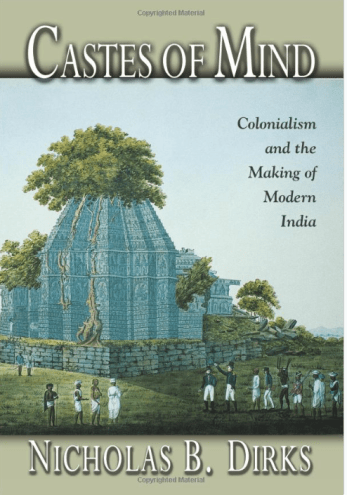
Dirks, Nicholas B. Castes of Mind: Colonialism and the Making of Modern India. Princeton: Princeton University Press, 2001.

Histories Implicated in Colonialism

Nicholas Dirks’ Castes of Mind: Colonialism and the Making of Modern India is a literature review of four centuries of scholarship on caste, a study of colonial knowledge and categorization, and an intervention in understandings of caste politics and nationalism, wrapped into a post-colonial history of modern India. A tremendous feat of anthropological history, Castes of Mind demonstrates how the nationalist movement and post-colonial histories are implicated in British colonial processes of knowledge production. The work is divided into three parts—parts one and two consider the “invention” of caste starting from early orientalist and Indological studies to the archival representation of caste and social difference; part three studies the ethnographic state in action through practices of enumeration, classification, and the census; and part four examines the relationship between the ethnographic state, caste politics, and Indian nationalism.

Continue reading “BOOK REVIEW: Nicholas Dirks’ Castes of Mind”

BOOK REVIEW: Bernard Cohn’s An Anthropologist Among Historians

51sNK7TGkVL._SX331_BO1,204,203,200_

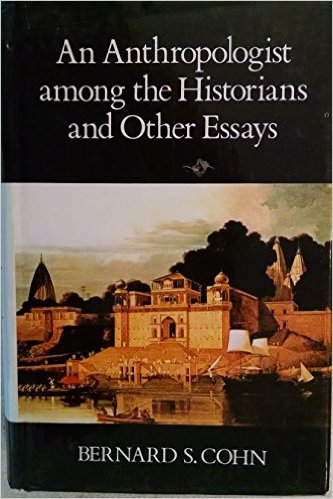
Bernard Cohn, An Anthropologist among the Historians and other Essays. Oxford University Press, 1998.

Chapters reviewed:

“History and Anthropology: The State of Play”

“The Pasts of an Indian Village”

“The Census, Social Structure, and Objectification in South Asia”

“Structural Change in Indian Rural Society 1596-1885”

Continue reading “BOOK REVIEW: Bernard Cohn’s An Anthropologist Among Historians”

BOOK REVIEW: Edward Miller’s Misalliance Ngo Dinh Diem

In Misalliance: Ngo Dinh Diem, the United States, and the Fate of South Vietnam, Edward Miller contributes a Vietnam-centric perspective to understand the making of 1950’s and 1960’s South Vietnam. Miller argues that the ‘politics of nation building’ informed the United States and Diem government’s ‘misalliance’ or diplomatic relationship from its beginning to demise. Using Vietnamese and American government documents, newspapers, and the MSUG archives, Miller examines the similarities and differences in US and Diem approaches to political centralization, economic development, counterinsurgency, and suppression of political threats. In this way, Miller demonstrates the complexity of nation building as both a discourse and practice that in fact encompassed debates on democracy, community, security, and social change. (325) Most importantly in his narrative, Miller centers Vietnamese agency and attempts to restore Ngo Dinh Diem and Ngo Dinh Nhu as rational, calculated politicians.

Continue reading “BOOK REVIEW: Edward Miller’s Misalliance Ngo Dinh Diem”

BOOK/ARTICLE REVIEWS: First Indochina War & its Aftermath (Christopher Goscha, Tuong Vu, Peter Hansen, and Pierre Asselin)

The historical dictionary of the Indochina War on-line Interdisicplinary Tool

Christopher Goscha, “A ‘Total War’ of Decolonization? Social Mobilization and State- Building in Communist Vietnam (1949-54),” War & Society, Vol. 31, No.2, (October 2012).

Christopher Goscha, “’Hell in a Very Small Place’ Cold War and Decolonisation in the Assault on the Vietnamese Body at Dien Bien Phu,” European Journal of East Asian Studies 9.2 (2010).

Christopher Goscha, “Colonial Hanoi and Saigon at War: Social Dynamics of the Viet Minh’s ‘Underground City,” 1945-1954,” War in History, 20(2) 2013.

Tuong Vu, “’To be Patriotic is to Build Socialism’: Communist Ideology in Vietnam’s Civil War,” Dynamics of the Cold War in Asia: Ideology, Identity and Culture edited by Tuong Vu and Wasana Wongsurawat (New York: Palgrave Macmillan, 2009).

Peter Hansen, “Bac Di Cu: Catholic Refugees from the North of Vietnam, and Their Role in the Southern Republic, 1954-1959,” Journal of Vietnamese Studies, Vol. 4 no.3 (Fall, 2009).

Pierre Asselin, “The Democratic Republic of Vietnam and the 1954 Geneva Conference: a revisionist critique,” Cold War History vol. 11, no.2 (May, 2011).

Continue reading “BOOK/ARTICLE REVIEWS: First Indochina War & its Aftermath (Christopher Goscha, Tuong Vu, Peter Hansen, and Pierre Asselin)”

“Last Days in Vietnam” Directed & Produced by Rory Kennedy (2014)

lastdays

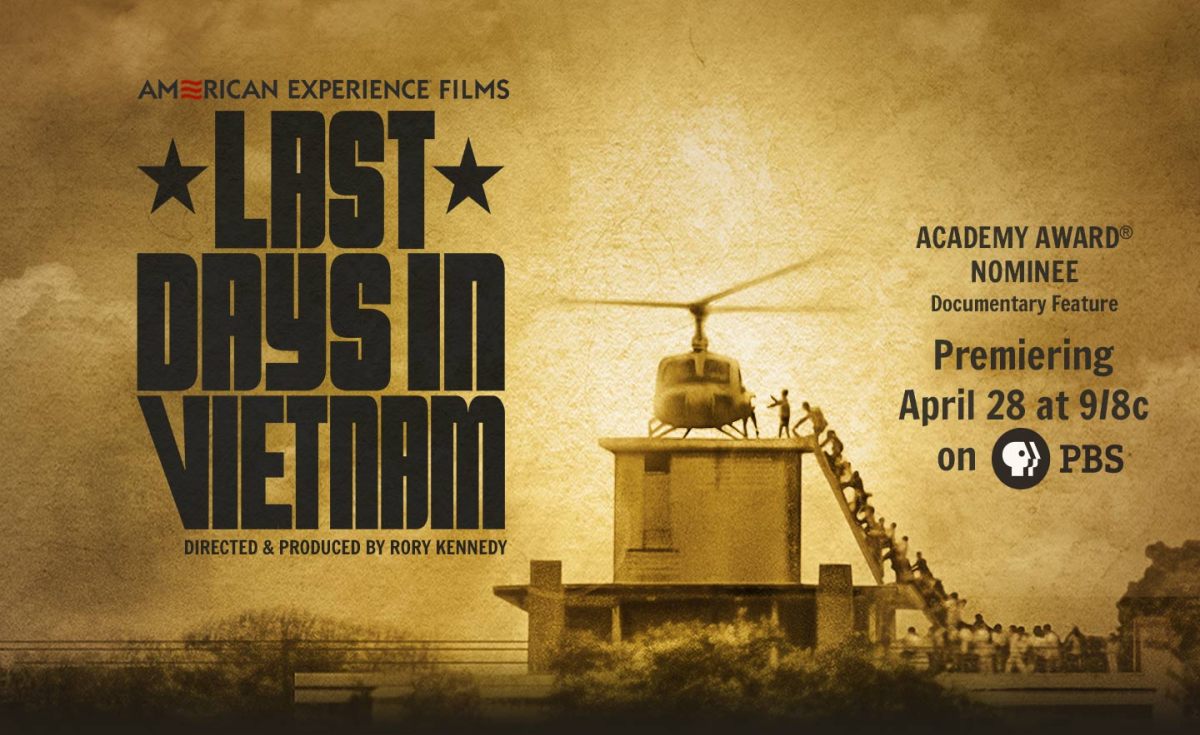
Two symbolic images encapsulate the ‘Fall of Saigon’: an image of the frantic helicopter evacuation off a Saigon apartment rooftop and that of North Vietnamese tanks rolling through the gates of Independence Palace. “Last Days in Vietnam” (2014), a documentary directed and produced by the daughter of former Senator Robert Kennedy, Rory Kennedy, traces the moments before these two historic events took place on April 30, 1975. Through captivating photos, video footage, maps, and interviews, “Last Days in Vietnam” weaves an emotional and informative narrative of the helicopter evacuation out of the U.S. embassy in Saigon. The film captures the sense of anger, fear, confusion, and disbelief from U.S. and South Vietnamese military, officials, and civilians.

Continue reading ““Last Days in Vietnam” Directed & Produced by Rory Kennedy (2014)”

BOOK REVIEWS: Susan Sontag’ Trip to Hanoi & Frances Fitzgerald’s Fire in the Lake

“The photographer is an armed version of the solitary walker reconnoitering, stalking, cruising the urban inferno, the voyeuristic stroller who discovers the city as a landscape of voluptuous extremes. Adept of the joys of watching, connoisseur of empathy, the flâneur finds the world ‘picturesque.”

– Susan Sontag, On Photography

Continue reading “BOOK REVIEWS: Susan Sontag’ Trip to Hanoi & Frances Fitzgerald’s Fire in the Lake”

BOOK REVIEW: Mark Bradley’S Vietnam at War

bradley vietnam at warBradley, Mark Philip. Vietnam at War. New York, N.Y.: Oxford University Press, USA, 2009.

Vietnam-Centrism as Historiographical Intervention

Beginning in the 1990s post Cold War and Vietnamese doi moi reforms, a sizeable body of scholarship on the Vietnam War has emerged with the goal of reintroducing the ‘Vietnamese’ back into the history of the war. As if part of the long shadow cast by the first ‘Southeast Asianists’ of J.C. Van Leur, D.G.E. Hall, and John Smail, the initiative to center the autonomous history of the region responds to the decades of Vietnam War histories defined by foreign relations and geopolitics. A similar historiographical challenge arises when we think about ‘Vietnam-centrism’: does this imply a shift in the relative importance of certain aspects in the narrative or a complete shift in viewpoint?

Continue reading “BOOK REVIEW: Mark Bradley’S Vietnam at War”