Excerpt: “This piece is part of a commitment to sharing and creating human communities of care alongside the materialist structures of support that constrain the everyday, such as time and resources. Interwoven with feminist and decolonial praxis, this piece includes a collection of critical pedagogy tactics, as well as syllabi excerpts from two digital humanities classes and an information studies class, and concludes with experimental dream classes for digital humanities. I also draw from my decade of teaching across disciplines and K–16 curricula and my commitments to critical pedagogy to reflect upon the specific experiences of teaching digital humanities courses this past academic year (2023–2024) that focused on historical data and visualization with a commitment to feminist and decolonial approaches. This past year, I taught a graduate introduction to digital humanities course with a focus on project management and public communication and a capstone undergraduate course focused on French colonial Vietnamese historical data. I also taught a graduate course on global libraries and decolonial futures primarily for graduate students completing their master’s degree in library and information science. I facilitated specific assignments and transparent reflexive modes of communication in a frenzied pursuit of an alternative to the current status quo, a current world marked by invisibilized labor and erasure of disabled whole selves, where students and instructors carry a hegemonic weight of capitalistic linear time defined by benchmarks, grades, progress, bureaucratic evaluations, and pursuit of transferable skills to serve an anonymized impossible market. Drawing wisdom from communities of laboring scholar activists and artists, I conclude with aspirational models for teaching and researching digital humanities that center the whole selves of students and instructors as part of the world and committed to decolonial futures.”
Backstory: This publication took decades to write, in part, because it was an embodiment of so many life stages–graduate school, job market, postpartum, covid, now on the tenure clock. In earlier stages, it was written here during a collective writing sprint session: https://cindyanguyen.com/2023/12/08/on-slowness/ This new version of the piece is also my grappling with teaching this first academic year at UCLA…a former version of myself wouldn’t have necessarily connected the dots that the first year as professor, the classroom space was so deeply consumed by discussions of academic labor, and the ‘vibe’ of our class was so deeply anti-capitalist, anti-institutional, and exhausted in every direction.
In the past, I was frustrated by how slow my work moved. I was impatient that my critical inquiry, confusion, curiosity forced me to constantly revisit sources, translations, historical contexts. Market pressures to publish and produce (a talk, an article, a dissertation, a book, teaching, digital resources) with the promise of professional security perpetuated a structure of external validation of scholarly production.
As I begin this new position at UCLA and transition into my professorial role, I’ve been reflecting on my messy and vibrant intersections of intellectual, personal, and political commitments. My transdisciplinary work in Southeast Asian history, community arts, digital humanities, and collaborative multimodal learning are all unified by an approach of ‘world building.’ I examine worlds past through historical and digital humanistic inquiry. A world building approach recursively makes space for the interwoven work of critique-reimagination of worlds past, present, and future.
At the heart of worldbuilding is an intention to slowness.
I undertake a slow critical approach in world building to take time to wander, wonder, pause, and be deeply embedded in cultural social worlds. I strive towards an ethical responsibility to understand primary sources and data and their affordances of production. I work and walk alongside others in intentional collaborations of knowledge making, honoring overlapping and divergent motivations and interests. We journey in collective writing sprints, organize feminist gatherings of knowledge sharing, workshop rough ideas, and enact tactics of creating near future and distant future realities. Scholarship is a communication ecosystem–through classroom engagements, public talks, side conversations, I revise and revisit my thinking in a persistent commitment to learn and unlearn. All of this work, this quiet labor and recursive journeying is both painfully and pleasurably slow.
Slowness in Teaching (Part 1)
Teaching through pandemic and navigating infrastructures of labor exploitation has left me beyond exhausted. Intentional slowness in teaching is a tactic of self-preservation and invitation towards rest. I counter both internal and external pressures to continually ‘improve’ or ‘innovate’ my teaching with a set of slow tactics:
Each time I teach a course, I permit myself to only ‘innovate’ (change the structure of the course) in either content or form. That means, I only change the reading/topics or change the structure of assignments/modality.
I offer assignments that invite in slowness from students rather than structurally add more. For example, rather than another paper or project, I task students with a portfolio assignment that recompiles and reflects on previous work within the classroom.
Topics are substantively aligned vertically instead of pressures towards horizontal expansion. We take ‘one thing’ and create opportunities to dive deeper, offering space for comparative wonderings but recognize that expertise in all the things is impossible. A final project that hones into the ‘one thing’ allows students to slowly explore.
At the heart of slowness is creating a class culture and community. As instructor, I dedicate time to learn about students through:
Revisiting personal goals and experiences in the middle of term through a check in questionnaire. Example
Creating space to celebrate and commemorate the class journey through a shared activity such as collective ‘yearbook’. See extended discussion of yearbook celebration and other assignments in my Teaching Workshop
I joined the Virtual Angkor team late their dissemination stage as a teaching fellow, committed to rethinking how to ‘teaching’ with virtual heritage resources. I designed the following teaching module guided by the question “What does it mean to tour the past?” We carry this out firstly through a slow observation based learning (where often in university environments it’s all about fast, skimming, speed reading, losing the experiential wonderment of it all.) I organized this teaching module be a collective meditation on meaning making, guiding questions, vocalizing understanding, figuring out collectively an unfamiliar historic moment and social world of thirteenth century Angkor.
In this workshop, Dr. Nguyen invites participants to practice a ‘slow viewing, slow listening, slow thinking,’ process of meaning making in virtual reality that can be taught in classrooms focused on world history, global Asias, and digital media and design. Dr. Nguyen leads an exploration of Virtual Angkor, a virtual reconstruction of the medieval Cambodian capital of Angkor that seeks to explore the diversity and complexity of Southeast Asia in digital heritage studies. Virtual Angkor reappraises the neglected region of Southeast Asia as a dynamic and important center for understanding global processes of premodern urbanisms, climate change, and ‘non-western’ forms of governance and power. This workshop invites participants to enter a VR space to listen, examine, and question. The experience aims to facilitate a ‘critical making’ understanding of the past which undermines the romanticized representations of the exoticized orient or the ruins of Angkor that permeate both the French colonial record and the contemporary tourism industry complex of Cambodia.
Slowness in Research (Part 2)
My Decolonial Data Pedagogy Lecture with Fulbright-Hays (Middlesex Community College and Lowell Public Schools) Group (linked to above) has been a culmination of a slow alignment of my pedagogical and research commitments towards imagining a post/anti/decolonial approach to my research on colonial histories and knowledge production. Slowness was at the crux of this material-computational analysis of this peripheral text, Technique du Peuple Annamite,that haunted-mesmerized me since graduate school. After eight years of working on a different project (history of libraries) amongst other life things, I return to this work in full gusto. The slowness of ‘figuring out’ this text through close reading, material analysis, collaborative analysis, and computational modeling has given this work the timespan it needed to breathe and imagine. Digital humanities is not just method, but invited a commitment to decolonial data critique and to platform a decolonial imagining, a building of an alternative world beyond/in contestation with its colonial confines.
Slowness as Method
My regular check in: “Is this new idea/approach/methodology substantive or additive?”
As of late, I’ve been repeatedly told: “You have so much energy!” “You’re so productive!” and I often blink back in cognitive dissonance to the comments because they shroud the quiet, recursive labor of what it means to do teaching and scholarship on the everyday. Folks see the product, not the process.
I’m slowly trudging through a mess and I embrace it. Slowness is a feature not a bug (particularly in virtual reality and computational analysis). Slowness is an invitation to critique and contextualize. Slowness is a pedagogical imperative to permit students to be curious again, to reflect and to celebrate. Slowness is a license to pause, rest, and do nothing.
On Slowness, A Feminist Reader (in progress)
Agamben, Giorgio. 1978/1993. Infancy and History: The Destruction of Experience. London: Verso.
Ahmed, Sara. 2017. Living a Feminist Life Durham: Duke University Press. Ahmed, Sara. 2021. Complaint! Durham: Duke University Press.
Casarino, Cesare. 2008. Time matters: Marx, Negri, Agamben, and the corporeal. In Cesare. Casarino & Antonio Negri (eds), In Praise of the Common. Minneapolis: University of Minnesota Press, pp. 219-246.
Combahee River collective. “A Black Feminist Statement.” April 1977, Boston, Massachusetts.
Chen, Mel Y., Mimi Khúc, and Jima B. Kim. 2023. “Work Will Not Save Us: An Asian American Crip Manifesto.” Disability Studies Quarterly43, no. 1 (Fall).
Halberstam, Judith. 2011. The Queer Art of Failure. Durham: Duke University Press.
Haraway, Donna J. 2016. Staying with the Trouble: Making Kin in the Chthulucene. Durham, North Carolina: Duke University Press.
Hartman, Saidiya. 2008. “Venus, in Two Acts.” Small Axe 12, 2 (June 2008): 1-14.
Mountz, Alison, Anne Bonds, Becky Mansfield, Jenna Loyd, Jennifer Hyndman, Margaret Walton-Roberts, Ranu Basu, Risa Whitson, Roberta Hawkins, Trina Hamilton, Winifred Curran. 2015. “For Slow Scholarship: A Feminist Politics of Resistance through Collective Action in the Neoliberal University.” ACME: An International Journal for Critical Geographies 14, no. 4 (2015): 1244.
Tuck, Eve and Wayne Yang. “R-Words: Refusing Research.” Humanizing Research: Decolonizing the Qualitative Inquiry with Youth and Communities. Django Paris and Maisha T. Winn, eds. Los Angeles: Sage Publications, Inc., 2013: 223-248.
This is a teaching module I designed for my course, “Contested Histories of Colonial Indochina” at Brown University, Fall 2019. [See below for full teaching module or Download Teaching Module Update: Remote Virtual Revised version below or Download Remote Teaching Module] I connected with an ambitious, award winning project “Virtual Angkor” which brings the 13th century Cambodian metropolis of Angkor to life through virtual reality and 3D simulation. Led by the talented team of Tom Chandler, Adam Clulow, Bernard Keo, Mike Yeates, and Martin Polkinghorne (SensiLab, Monash University, UT Austin, Flinders University), Virtual Angkor allows students to experience and pose questions about Angkor’s social life, trade networks, structure of power and kingship, as well as architectural layout.
Rather than get lost in the semantic battle of defining disciplines (What is/are the digital humanities?), this presentation explores how we as humanists can use data to help us think through our humanities questions, evidence, and argument. Drawing from ‘digital’ and ‘data science’ methods of experimental design and operationalizing, I shared my data science project on the library of congress collection of Vietnamese materials.
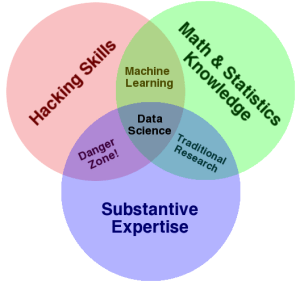
Spring of 2016 I enrolled in my first ever graduate level data science course at the School of Information at UC Berkeley. The course ‘Deconstrucing Data Science’ investigated quantitative methods of machine learning and data analysis. Coming from a humanist background, the course challenged me to think in drastically different ways about evidence, data, and argument. In the process of learning new data science methods, we reflected on experimental design and challenged the underlying assumptions of empirical methods. These critical reflections resonated with similar debates around the ‘scientific’ character of history and the social sciences to draw informed conclusions about the past and society.
The map interface for searching materials. The Vietnam Project MSU Archive
Introduction
While writing about my data science course at the School of Information in the spring of 2016, I realized that I needed a long preface to explain why it was that a historian of Vietnam was using computational methods in their research. My long engagement with the world of ‘tech’ has become less of a dabbling and more of a blurry (exciting) amalgamation where all of my work in history, digital humanities, quantitative methods, data science, and information science have converged.
Below is a working paper I wrote for my graduate course on the History of Data Science led by Professor Cathryn Carson Spring 2015 at UC Berkeley. You can see the bibliography of readings from our class on my Zotero library.
What does data mean to a humanist? What would it mean to datify humanistic inquiry? This paper examines the recent literature on data within the humanities and critical debates about ‘digital humanities’. As I demonstrate in this paper, the debates around data within the humanities fits within three interlocking frameworks: first, the tensions between relevancy and distinction within the humanities in relation to the sciences; second, the boundary work of defining and distinguishing ‘digital humanities’; and third, the shifts in methods occurring across all disciplines around data, data intensive sciences, mixed methods, and scholarly communication.
I recognize that debates around disciplinary identities and methods can transform into polemical battles around academic territory. I seek to immerse myself in these debates to understand the contours and ridges and to understand the boundary making processes currently manifesting within the humanities. Observing historical patterns within these debates, I conclude that a historiography of data science, data intensive humanities, and digital humanities is inevitably a narrative about disruption of existing disciplinary boundaries.
This past spring our team of awesome dh-ers at Berkeley put together the 2015 Berkeley DH Faire. Here is the quick poster my collaborator Amy Zou (Cognitive Science & Linguistics) put together.
My Berkeley Digital Humanities Working Group (BDHWG) Co-convener and friend, Camille Villa, wrote this great recap of the event by on the DH@Berkeley blog:
DH Community Gathers for 3rd Berkeley Digital Humanities Faire
by Camille Villa, 15 Apr 2015
On April 7th and 8th, Berkeley’s digital humanities community gathered to share research and celebrate an exciting year of forging new collaborations.
I have a confession. I’ve attended DH conferences, worked as the ‘Digital Humanities Assistant’ on campus, and advocated for the development of DH resources here at Berkeley, but…I’m still working through what Digital Humanities actually means for me and my research.
The good thing is, this is exactly the purpose of the Berkeley Digital Humanities Working Group BDHWG (or #BDHWG for those following our updates on twitter, sorry for the long acronym) is a Townsend Center for Humanities working group started four years ago. Over the course of those years, we’ve held big events like the DH project fair, talks with Dan Cohen and Rob Nelson from DH institutes across the nation, co-organized HackFSM, and collaborated with regional DH groups and THATcamps.
These big events are a product of the immense diversity and creativity of our working group—a small to mid sized community of students, faculty, and staff interested in learning more about the digital humanities. In the spirit of ‘working groups’ we believe in the values of curiosity, collaboration, and diversity.


![[TEACHING] Virtual Reality Module: Analyzing Representations of Angkor](https://cindyanguyen.com/wp-content/uploads/2019/11/p1426032.jpg?w=1200)




 Cindy A. Nguyen